How Foldable Boxes Cut Shipping Cost: The Flat-Pack Advantage Explained

A foldable box is a premium rigid box whose sides collapse flat for transport and storage, then snap back into shape when it is time to pack a product. The change sounds small, but it attacks shipping cost at three different moments: when empty boxes travel from the factory to your warehouse, when packed parcels are billed by dimensional weight, and when boxes need to return for reuse. This guide explains how a foldable box reduces shipping cost, where the savings come from, and how to decide whether folding rigid boxes are right for your brand.
By Packaging Editorial Studio · 9 min read · Updated September 2026

The Short Answer
Shipping cost is calculated on both weight and volume. A traditional rigid box keeps its full volume even when it is empty, so you pay for air at every step. A foldable box collapses to a fraction of its volume when empty, which means lower freight bills for inbound packaging, higher warehouse capacity, lower dimensional weight on packed shipments, and cheaper return logistics for reuse programs. The most commonly cited result: foldable rigid boxes reduce empty-box shipping volume by 60-75%.
Why Shipping Cost Is Rising
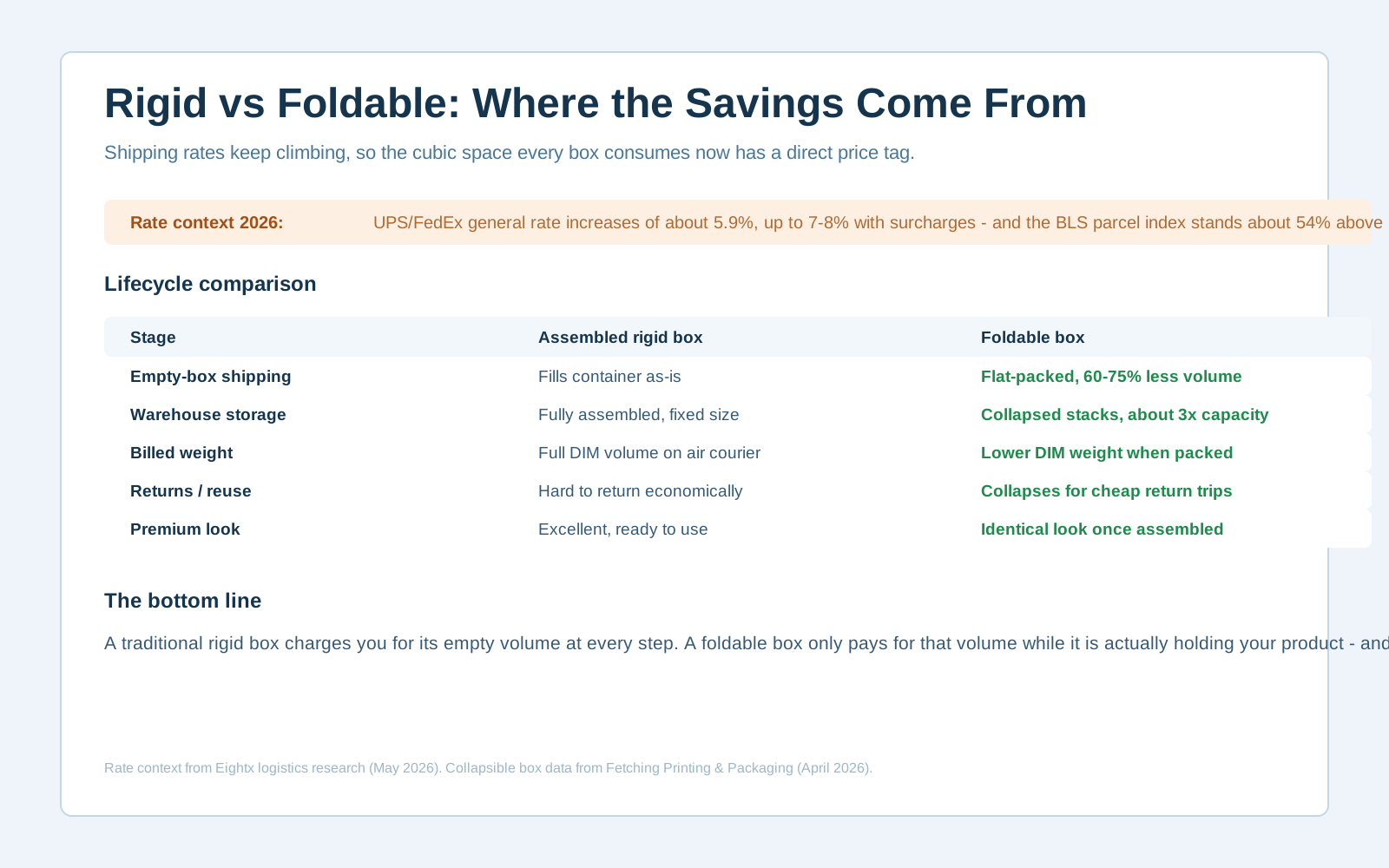
Packaging decisions now happen against a backdrop of rising rates. UPS and FedEx announced 2026 general rate increases of about 5.9%, and with fuel, residential and peak surcharges the real increase lands closer to 7-8%. The U.S. Bureau of Labor Statistics parcel index stands roughly 54% above December 2019 levels, and the same freight math applies internationally. When rates climb every year, the cubic volume of your packaging becomes a recurring cost line instead of a one-time material expense.
How a Foldable Box Saves at Every Shipping Stage
The foldable box saves money in four distinct ways, and the numbers come from real freight comparisons of collapsible rigid boxes.
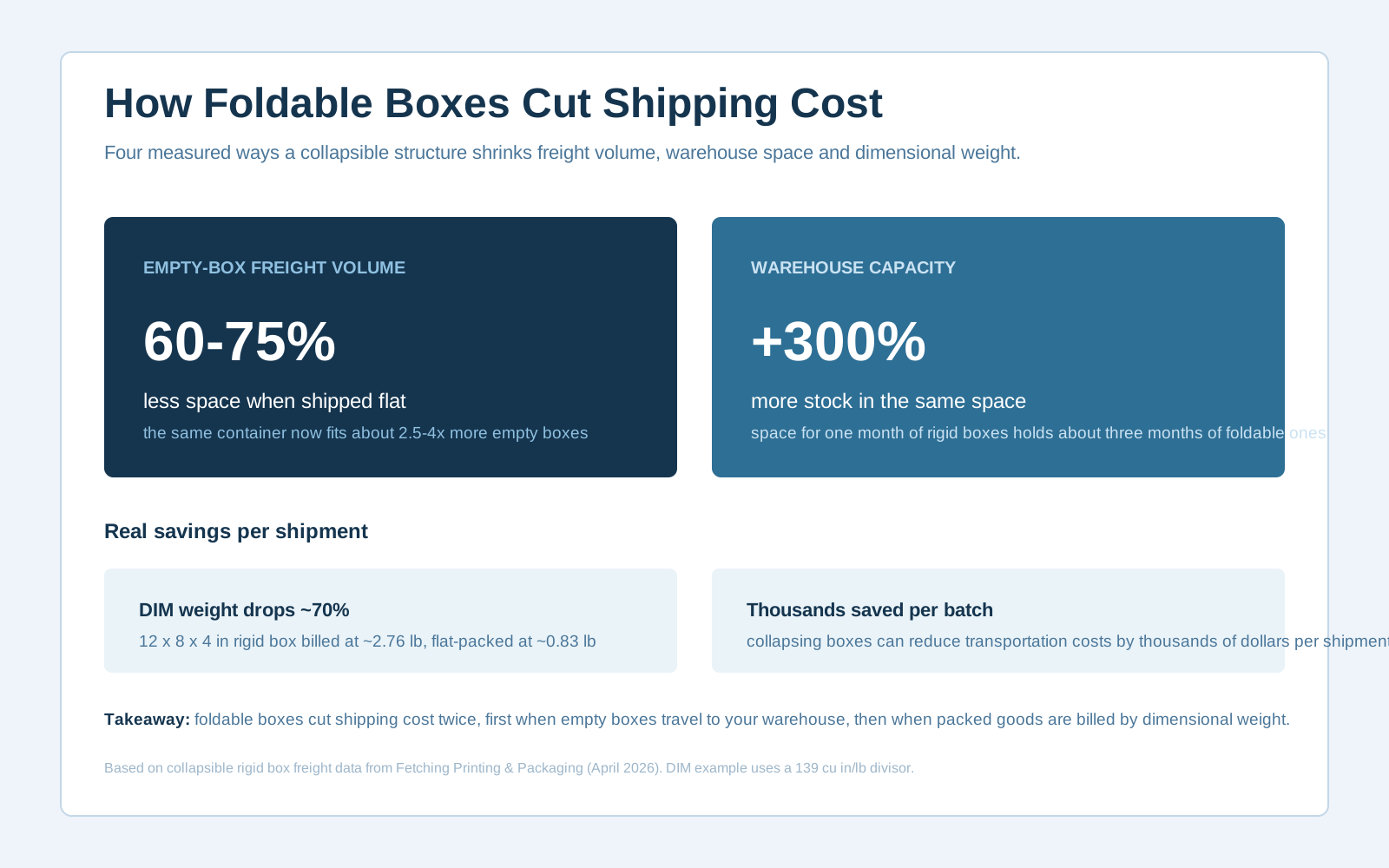
- Inbound empty boxes. When boxes ship flat from the factory, they occupy 60-75% less space. The same container or truck that held one batch of assembled rigid boxes can hold roughly 2.5-4 times as many foldable ones.
- Warehouse storage. Collapsed boxes stack tightly, so a warehouse that held one month of rigid box inventory can typically hold about three months of foldable box inventory, an increase of around 300% in effective storage capacity.
- Dimensional weight. Couriers bill air freight and parcel shipments by dimensional (DIM) weight, volume divided by a divisor. Collapsing the box cuts its empty volume by 60-75%, and the DIM weight falls by a similar margin. In the industry example of a 12 x 8 x 4 in box, DIM weight drops from roughly 2.76 lb assembled to about 0.83 lb collapsed.
- Returns and reuse. A box that folds can travel back for refill at a fraction of the return cost, which makes reusable packaging programs and rental or subscription models financially viable.
The chart below summarizes these four savings.
Shipping Cost per Box: Rigid vs Foldable
The difference becomes clearest when you compare the same premium box in assembled and foldable form across its whole lifecycle. A traditional rigid box charges you for its empty volume at every stage: it fills containers as-is, takes fixed warehouse space, carries full DIM volume when shipped, and costs as much to return as to send. A foldable box only pays for that volume while it is actually holding your product, and it can collapse for a cheap return trip. Once assembled at your fulfillment center, it looks and feels identical to a one-piece rigid box, so the premium unboxing experience is preserved.
Estimating Your Shipping Cost Savings
Run this simple five-step check before you switch:
- Measure both states. Record the assembled and collapsed dimensions and weights of your box.
- Calculate DIM weight. Divide length x width x height by your courier's divisor (for example 139 cu in per lb for many international couriers) in both states.
- Check which billing weight applies. The courier charges the higher of actual and dimensional weight, so the saving matters whenever DIM weight drives the bill.
- Add the inbound leg. Multiply your empty-box container or truck usage by the 60-75% volume reduction.
- Add storage value. Estimate the warehouse space freed, the 300% capacity gain, and what that space is worth per year.
For most brands that import rigid boxes, the inbound and warehouse savings alone repay any engineering cost of the foldable design, and DIM savings then continue on every packed shipment.
When Foldable Boxes Make Sense
- You import rigid-style boxes in large batches and pay freight on empty volume.
- Your parcel bills are driven by dimensional weight rather than actual weight.
- Warehouse space is expensive or you store months of box inventory.
- You offer subscription, refill or returnable packaging programs.
- You need a premium rigid look but currently use a lighter corrugated box to save money.
Designing a Foldable Box That Survives Transit
- Specify hinges and folding creases on durable paperboard that survives repeated folding and assembly.
- Design the folding geometry so assembly is tool-free and takes seconds in your fulfillment line.
- Keep magnetic closures and ribbons detachable or built into panels that do not weaken the fold.
- Test the empty box through repeated collapse-and-assemble cycles before production.
- Confirm your DIM weight saving with the actual packed product, not just the empty box.
FAQ: Foldable Boxes and Shipping Cost
How much can foldable boxes reduce shipping cost?
Foldable rigid boxes reduce empty-box shipping volume by about 60-75%, which translates into lower inbound freight and dimensional weight on packed parcels. Warehouse capacity can rise by about 300% in the same floor space.
What is dimensional weight and why does it matter?
Dimensional weight (DIM weight) is the volume of a parcel divided by a courier divisor. Couriers charge the higher of actual and dimensional weight, so a bulky box can cost far more than its real weight suggests. Collapsing packaging shrinks that billed volume.
Do foldable boxes look as premium as rigid boxes?
Yes. Once assembled around the product, a foldable rigid box uses the same wrapped paperboard, magnetic closures and finishing as a one-piece rigid box. The visible difference is limited to the internal folding structure.
Are foldable boxes only for empty-box shipping savings?
No. They also cut warehouse storage needs, enable cheap returns for reuse programs, and lower the freight volume of transporting boxes between facilities or to retail events.
What is the main trade-off of a foldable box?
The main trade-offs are design and tooling complexity, and the need to assemble the box before packing. For brands with high box volume or DIM-weight-heavy shipments, the freight and storage savings usually outweigh those costs.
Start Your Foldable Box Project With Karipackage
If your shipping cost is climbing and your premium boxes ship, store or bill as empty volume, a foldable structure is the packaging fix worth testing. Measure your current boxes, estimate the DIM and inbound savings, and ask a packaging partner to prototype a foldable version of your existing design.
Karipackage is a professional color box and carton supplier with 30 years of manufacturing experience. Karipackage engineers foldable rigid box structures, selects folding-grade paperboard, and validates crease and closure performance with physical samples, so your boxes keep the premium look while your shipping cost drops. Ask Karipackage for a foldable box quote and see the freight math for your own box size.
Sources and Editorial Notes
Collapsible rigid box savings data (60-75% volume reduction, ~300% storage capacity, DIM weight example) based on freight comparisons published by Fetching Printing & Packaging, April 2026. Rate context (2026 carrier increases, BLS parcel index) from Eightx logistics research, May 2026. Savings estimates are editorial guidance; validate dimensions, DIM billing and volumes with your courier and packaging supplier before production.
Leave a Comment
Comments are reviewed before appearing.