Honeycomb Packaging: The Lightweight, Recyclable Protection Brands Are Switching To

Honeycomb packaging is a protective packaging material made from a kraft-paper hexagonal core sandwiched between paper liners. It looks like an overgrown sheet of honeycomb, which is exactly where it gets its name. Instead of relying on thick plastic foam or wooden frames, honeycomb packaging spreads pressure across hundreds of small hexagonal cells, giving it a strength-to-weight ratio that plain paperboard cannot match. This guide covers how honeycomb packaging is made, what it is made of, its benefits and the situations where it genuinely beats foam, corrugated board and wood.
By Packaging Editorial Studio · 9 min read · Updated September 2026
The Short Answer
Honeycomb packaging replaces heavy and hard-to-recycle protective materials with a light paper structure. Its hexagonal core is strong in compression, resists slow collapse under long-term stacking, and goes straight into standard paper recycling at end of life. Brands use it for pallet top and bottom pads, edge protectors, void fills and heavy-duty mailers, cutting both shipping weight and packaging waste.
What Is Honeycomb Packaging Made Of?
Honeycomb packaging starts with one material: paper. The structure has three layers, and each one stays fully recyclable.
- Two outer liners — sheets of kraft paper that form the flat top and bottom faces. These can be upgraded to white board for printing.
- A honeycomb core — strips of kraft paper bonded together, then expanded to create the familiar hexagonal cells.
- Water-based adhesive — usually PVA glue, which holds the core to the liners without blocking paper recycling.
The kraft paper can include recycled fiber, and the finished board is compatible with ordinary paper recycling streams with no separation step. Recycled paperboard versions and moisture-resistant coatings are also available for specific shipping conditions.

Why the Hexagonal Shape Works
Nature designed the hexagon, and engineers borrowed it. In a honeycomb core, every cell wall supports the cell next to it, so pressure on one face is distributed across the entire panel instead of concentrating at a single point. That structure is why honeycomb packaging feels almost weightless in your hand but resists strong pressing and bending forces. It is also why the material punches far above its weight: strength comes from geometry, not from material thickness.
Honeycomb paperboard has two further practical advantages. First, it creeps less than foam, meaning it holds its shape under long stacking loads instead of slowly compressing over weeks. Second, its light weight reduces freight cost and transport carbon with every shipment.
The Honeycomb Packaging Market Is Growing
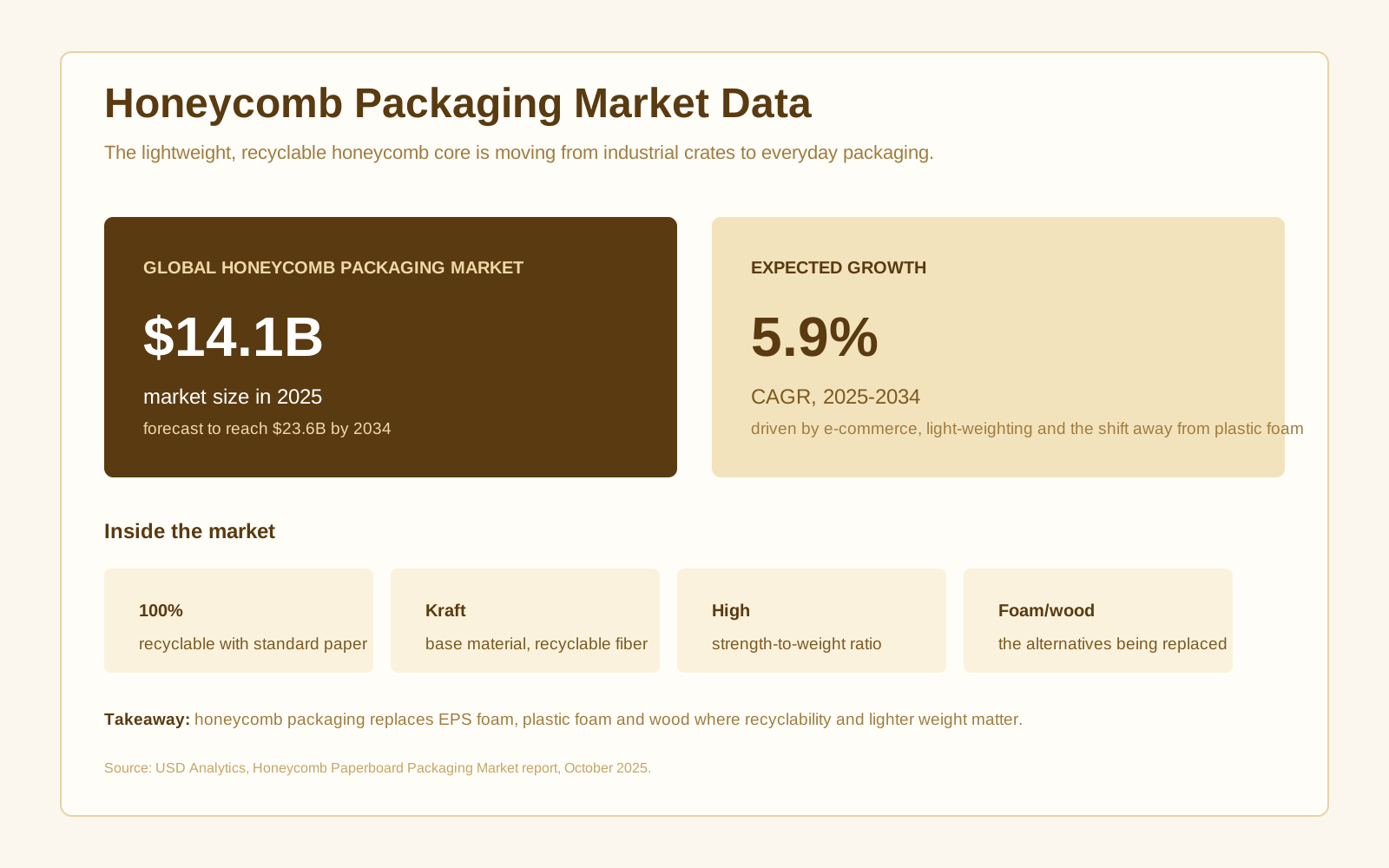
USD Analytics values the global honeycomb packaging market at $14.1 billion in 2025 and forecasts it to reach $23.6 billion by 2034, growing at about 5.9% per year. Growth is fueled by e-commerce, by brands light-weighting their shipments, and by regulation and consumer pressure to move away from plastic foam. The chart below summarizes the market picture.
The Five Benefits of Honeycomb Packaging
Honeycomb packaging earns its place in a packaging system through five measurable benefits, shown in the chart below.
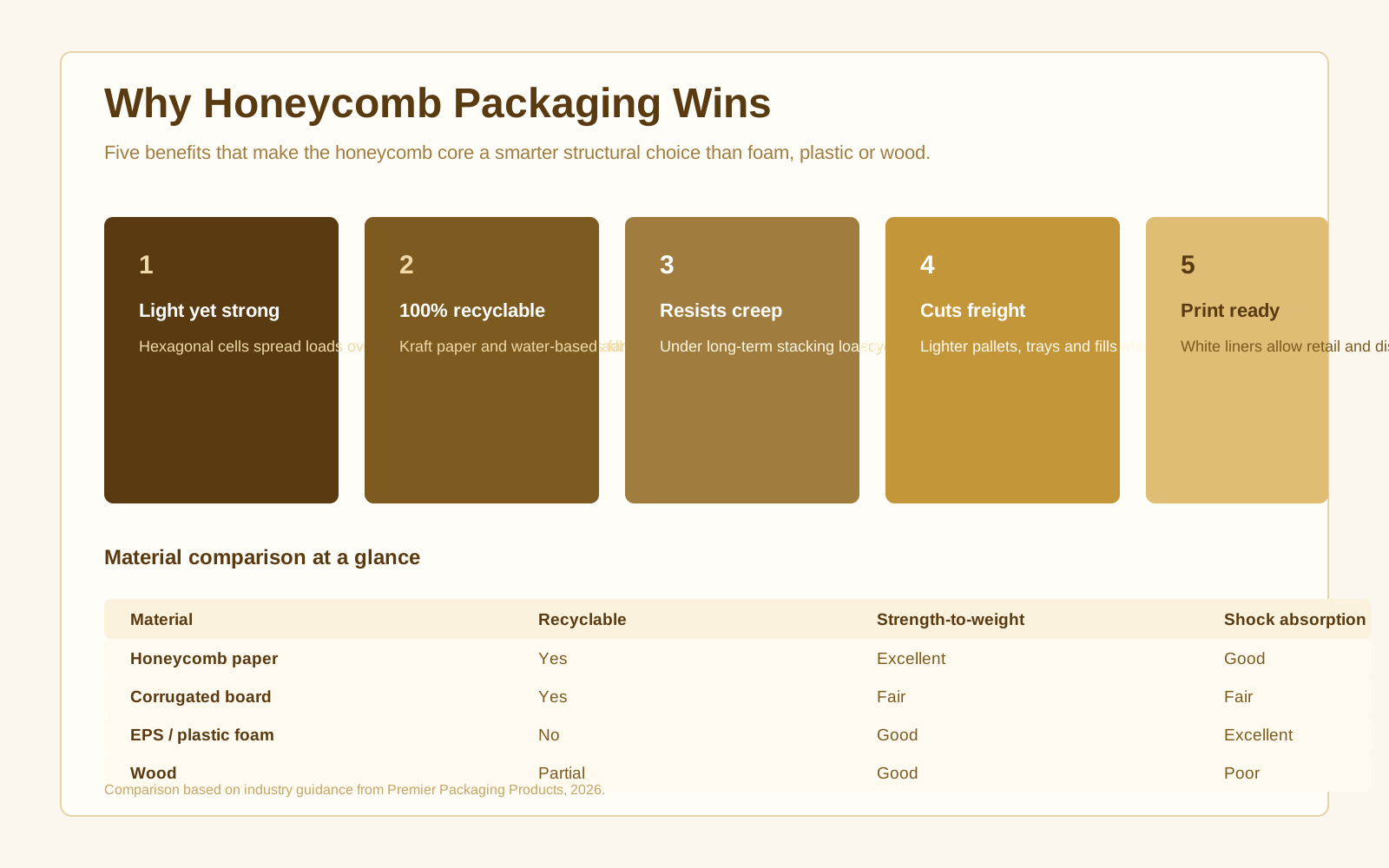
- Light yet strong. Hexagonal cells spread loads across a wide area, so thin paper carries far more than its own weight.
- 100% recyclable. Kraft paper and water-based adhesive flow through normal paper recycling with no separation.
- Resists creep. Under long-term stacking loads, honeycomb keeps its shape better than foam, which slowly compresses.
- Cuts freight. Lighter pallets, trays and fills mean lower shipping weight and lower transport carbon.
- Print ready. White liners allow clean retail and display printing on the outer face.
Where Honeycomb Packaging Replaces Foam and Wood
Honeycomb packaging is most valuable in four protective roles, all of which were traditionally done with EPS foam, plastic foam or timber.
- Pallet pads. Top and bottom pads spread stack weight evenly and stop goods shifting or deforming in transit.
- Edge and corner protectors. Rigid honeycomb corners hold better under compression than foam and are fully recyclable.
- Void fill and dunnage. Honeycomb blocks cut to the internal dimensions of a carton keep products from sliding during transit.
- Industrial crate and tray layers. End caps, dividers and spacers support heavy parts and appliances without the creep of foam.
There is one honest caveat. For extreme shock absorption, such as fragile electronics in a long free-fall drop, specialist foam is still the benchmark. Honeycomb packaging is usually combined with a small amount of cushioning where the product is genuinely delicate, while the surrounding structure does the heavy support work.
Honeycomb Packaging vs Corrugated Board
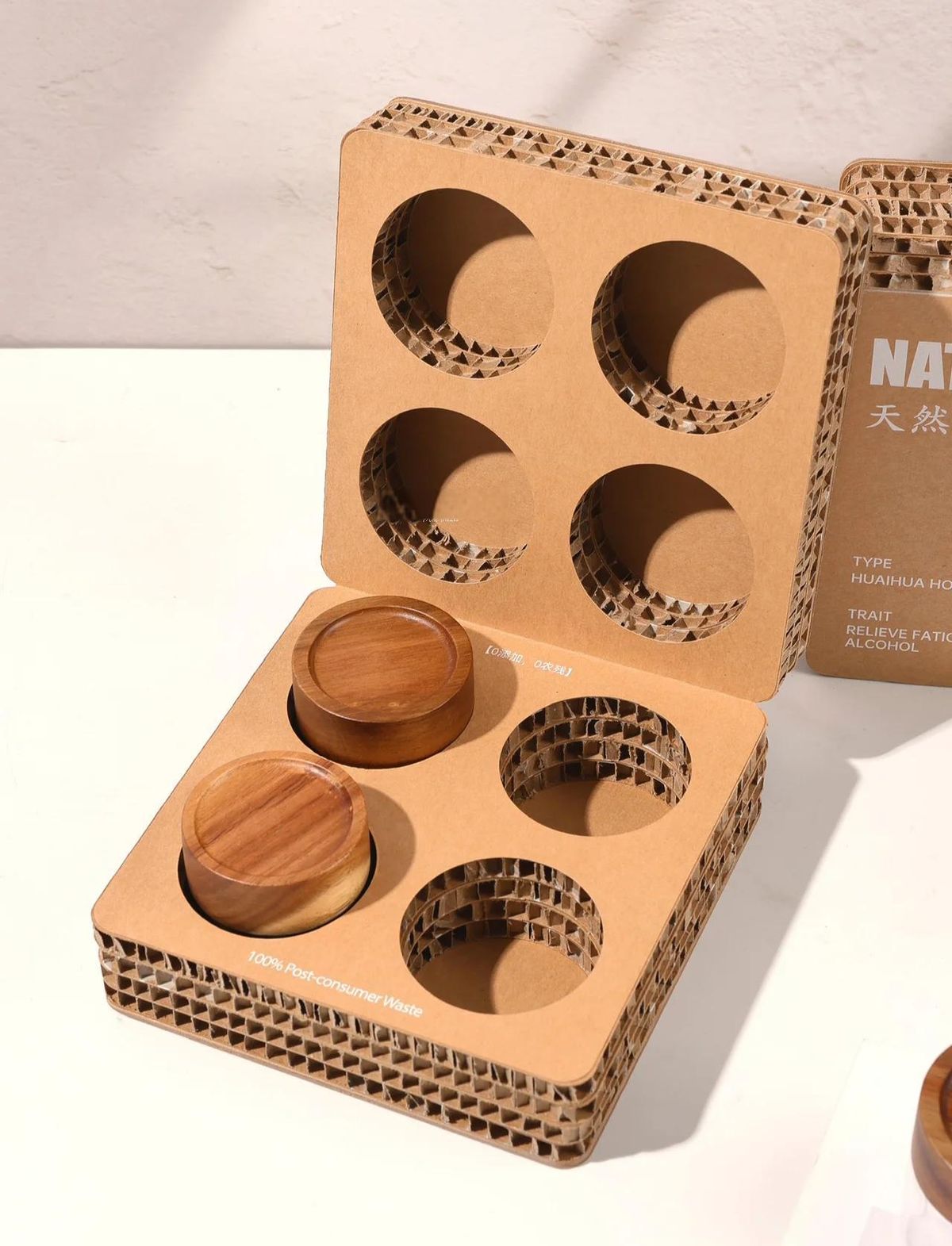
Both are recyclable paper products, so the choice comes down to load. Corrugated board is the low-cost workhorse for everyday shipping boxes and is excellent under light loads. Honeycomb packaging has a higher strength-to-weight ratio and better flat compression, so it wins when a shipment needs vertical stacking strength, heavy load spreading or long-term load resistance without extra weight. For most retail parcels, a corrugated outer box remains the right base; honeycomb then earns its cost in the protective inserts, pallets and heavy-duty components.
When to Switch to Honeycomb Packaging
- Your brand has plastic foam or EPS targets and needs a curbside-recyclable alternative.
- You ship heavy or stackable goods where corrugated board alone risks crushing.
- Freight weight is a significant cost and wood or foam pads are currently adding to it.
- Long-term warehouse stacking causes foam inserts to compress over time.
- You want a protective component that can carry printing for brand or handling instructions.
Checklist: Specifying Honeycomb Packaging
- Confirm the required compression and stacking load with the actual packed product
- Choose kraft, recycled or white-lined board to match strength and printing needs
- Define core cell size and panel thickness with your supplier
- Add moisture-resistant coating only if transit conditions demand it
- Prototype the pad, corner, tray or void fill with the real product
- Test drop, vibration and stacking performance before production
- Verify the whole assembly still flows through standard paper recycling
FAQ: Honeycomb Packaging
What is honeycomb packaging?
Honeycomb packaging is a protective paper material with a hexagonal kraft-paper core between two flat liners. It is used for pallets, edge protectors, void fills, heavy-duty trays and protective board in place of foam, plastic or wood.
Is honeycomb packaging recyclable?
Yes. Honeycomb packaging is made from kraft and recycled paper bonded with water-based adhesive, so it can go into standard paper recycling without separating layers or special handling.
Is honeycomb packaging stronger than corrugated board?
For compression and stacking strength per unit of weight, yes. Corrugated board remains cheaper for light everyday boxes, while honeycomb packaging offers higher strength-to-weight and better resistance to long-term load.
What can honeycomb packaging replace?
It commonly replaces EPS foam, plastic foam and wood in pallet pads, edge protectors, dunnage, industrial trays and crate layers, cutting weight and improving recyclability.
Can honeycomb packaging be printed?
Yes. With white-lined board, the outer face can carry brand graphics, handling marks or retail display artwork, though most honeycomb components stay in natural kraft.
Start Your Honeycomb Packaging Project With Karipackage
Honeycomb packaging earns its keep wherever strength-to-weight and recyclability matter. Start with the loaded weight and stacking conditions of your product, prototype the honeycomb component, and test it the way your shipment will really be handled before scaling up production.
Karipackage is a professional color box and carton supplier with 30 years of manufacturing experience. When your product needs both an attractive printed box and dependable paper protection, Karipackage helps you combine custom cartons with kraft honeycomb pads, dividers and corner protectors in one coordinated packaging system, so the outside looks on-brand and the inside protects as well as foam, without the plastic. Talk to Karipackage about your honeycomb packaging project.
Sources and Editorial Notes
Market size and CAGR figures from USD Analytics, Honeycomb Paperboard Packaging Market 2025-2034, October 2025. Material structure, recyclability and comparison notes follow industry guidance from Premier Packaging Products (2026). Design and testing recommendations are editorial guidance; confirm specifications with your packaging supplier and validate with physical samples before production.
Leave a Comment
Comments are reviewed before appearing.